
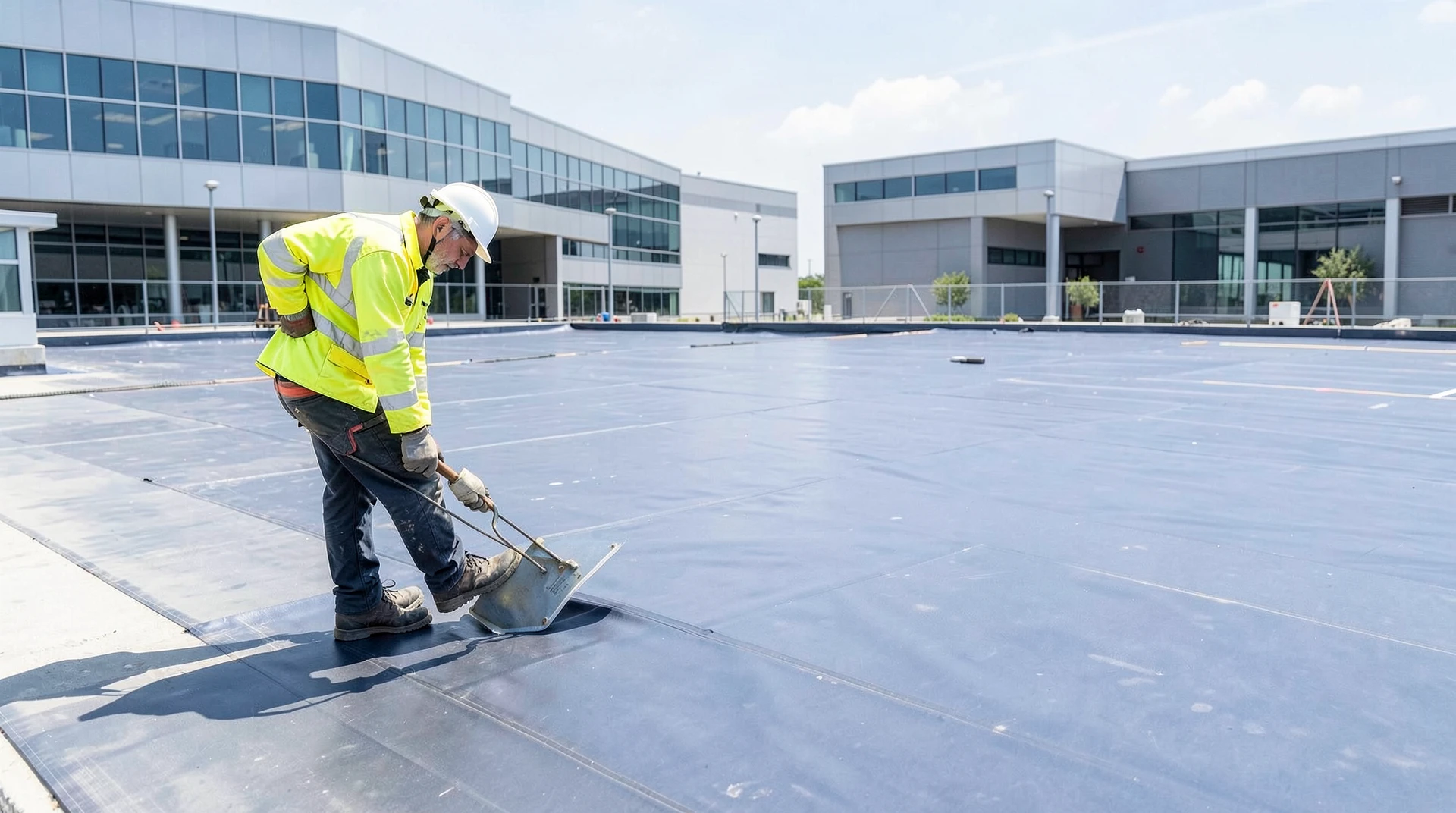
Preventing Premature Failure of Commercial Flat Roofs: Your Shield Against Hidden Damage
For property owners in the Dallas area-whether you're managing a bustling retail space, an established office building, or a complex industrial facility-your roof is arguably the single most important piece of infrastructure. It’s not just a covering; it is the primary shield for your entire investment. When we talk about commercial structures, the threat isn't always visible: sometimes, the damage that causes catastrophic failure is subtle, occurring years before a major leak even shows up. As someone who has spent 22 years focusing heavily on complex commercial roofing systems across Dallas, from large-scale TPO installations to intricate modified bitumen sheets, I’ve seen what happens when owners wait until disaster strikes. A minor breach today can cost exponentially more in secondary damage-mold remediation, structural rot, and lost business time-than preventative maintenance ever would. We need to shift the conversation away from "cost" and towards risk mitigation. Understanding how to approach preventing premature failure of commercial flat roofs isn't an expense; it is essential property protection.
Four Critical Signs Your Commercial Roof Needs Immediate Attention
Many people assume that if they don’t have a visible puddle, their roof is fine. Unfortunately, the most dangerous issues are often hidden just beneath the surface or localized to highly vulnerable areas. Recognizing these subtle indicators of systemic degradation is the first step toward protecting your property's structural integrity.
First and foremost, look closely at ponding water. This isn't just a cosmetic issue; it’s a warning sign that indicates compromised drainage. Water pooling for even an extended period means the roof grade or internal drains are struggling-or failing-to move the water away quickly enough. Standing water accelerates material breakdown dramatically.
Next, pay attention to discoloration and staining. If you see streaks of brown, green, or black stains that don't correspond with typical runoff patterns, this suggests a membrane compromise beneath the visible surface. This could be mold growth, mineral deposits from chronic leaks, or biological action that signals water ingress points.
We must pay extreme attention to flashing and seams. These are the high-risk areas where almost every major leak begins. Flashings are the metal pieces installed around penetrations-like HVAC units, exhaust vents, and parapet walls-to ensure water is diverted correctly. Even a tiny crack in the sealant or slight lifting of flashing material can allow moisture to creep underneath the membrane over time, eventually leading to massive leaks that seem to come from nowhere.
A related indicator involves structural shifts: unexplained bowing in the roof decking, cracking along concrete pedestals, or noticeable changes in the roof pitch are all signs that the roofing system is under stress-be it from ground movement or internal pressure buildup. These require a detailed assessment immediately, not just a visual inspection. Knowing when to repair versus when a full new roof installation commercial project is necessary requires an expert eye that can differentiate between minor sealant failure and irreparable membrane compromise.
Understanding Degradation: What Causes Flat Roofs to Fail Before Expected?
To truly master preventing premature failure of commercial flat roofs, you have to understand the forces working against your materials every single day. Failure is almost never due to a single factor; it’s usually a combination of environmental stress and physical neglect.
One of the most common culprits we encounter is UV exposure combined with thermal cycling. Flat roof membranes (like TPO or Modified Bitumen) are designed for durability, but Texas weather pushes them hard. Intense summer heat followed by sharp drops in temperature-the constant cycle of expansion and contraction-puts immense mechanical stress on every seam, joint, and coating. Over time, this fatigue weakens the material’s molecular structure.
Another critical element is poor drainage gradients. If water naturally pools, that standing liquid acts as a magnifying glass for failure. It traps moisture against the membrane, accelerating decay and creating an environment ripe for biological growth (mildew, algae). This constant saturation degrades both the roofing material and the underlying insulation/decking over time.
We also have to consider physical stresses, such as heavy foot traffic concentrated in certain areas or continuous vibration from adjacent mechanical equipment (like large compressors). These points of stress create localized wear patterns that can compromise the membrane far earlier than expected. This is a deep-dive area that distinguishes a general contractor from a specialized roofing expert.
I remember working on a complex industrial facility near 4122 Dutton Dr, Oak Cliff, TX 75211 last year. The owner was worried about heavy hail damage, but after we did our full assessment, the primary failure point wasn't the impact; it was chronic drainage issues around an old HVAC unit connection that had been poorly sealed decades ago. This anecdote perfectly illustrates how often neglect-the accumulation of minor issues-is far more damaging than a single catastrophic event. Addressing these root causes is key to preventing premature failure of commercial flat roofs.
Proactive Maintenance: Strategies for Extending Commercial Roof Life
The best defense against costly, unexpected leaks is proactive maintenance. Viewing roof care as an ongoing investment rather than a periodic expense fundamentally changes the outcome for your property. This requires a comprehensive strategy built on regular inspection and specialized material management.
We strongly recommend implementing Preventative Maintenance Inspections (PMIs) on a scheduled basis. A PMI isn't just someone walking across the top; it involves a detailed, systematic search of every critical component: checking all flashing perimeters, inspecting expansion joints for sealant degradation, and verifying that scuppers are clear of debris.
Specialized materials can make a huge difference in extending life. When we discuss commercial flat roof maintenance, simple patching isn't enough. Modern solutions include high-grade liquid membranes or specific coatings (like silicone blends) designed to penetrate microscopic cracks and seal the entire surface, dramatically boosting the overall TPO roofing lifespan. These are advanced protective layers that add depth and value far beyond a basic coating application.
Finally, proper drainage management is non-negotiable. This means ensuring gutters are not only clear but also that the downspouts funnel water correctly away from the building structure. Every penetration-from vent pipes to electrical conduits-must have its flashing assessed. A routine checklist for facility managers should include: debris removal (leaves, silt), checking sealant integrity at all expansion joints, and investigating any visible stress points or uplifting edges immediately.
The Expertise Difference: Choosing the Right Partner to Protect Your Investment
Ultimately, mastering preventing premature failure of commercial flat roofs hinges entirely on who you hire. You could have the best materials in the world-the most durable TPO membrane available-but if they are not installed by a seasoned professional using proper techniques and local code knowledge, they will fail prematurely anyway. This is where experience matters.
I understand that dealing with contractors can be stressful. The fear of being overcharged, or worse, receiving subpar work that fails within two years, is completely valid. At Rock Line Roofing, we operate on transparency-we don't sell panic; we sell verifiable structural integrity and lasting peace of mind. When you partner with us, you are gaining access to decades of specialized knowledge regarding Texas weather patterns and local building codes in areas ranging from Bishop Arts to White Rock Lake.
We provide comprehensive warranties that cover both the materials and the labor, giving you a genuine sense of security. We don't just put up a roof; we reinforce your home’s structural shield against everything Oak Cliff throws at it. Our commitment is straightforward pricing and solid coverage without unnecessary guesswork or hidden fees.
If you are concerned about potential leaks, whether from hail damage or slow degradation, do not rely on the first company that calls. Trust the expertise of a local partner who specializes in commercial longevity. If you're ready to move beyond fear and into an informed, proactive maintenance strategy, call us today for a detailed inspection. We can be reached at +1 469-589-3827 or visit us at 4122 Dutton Dr, Oak Cliff, TX 75211. Home. Rock Line Roofing Commercial Roofing in Oak Cliff, TX. Flat Roofing in Oak Cliff, TX serving Oak Cliff, TX. areas we serve. all our services.