

Finding a leak in your flat commercial roof-whether you live near Bishop Arts or run a business in the industrial sections of Oak Cliff-is immediately stressful. You worry about water, but you also worry about what that little drip means for your entire property's long-term health and value. Many people assume that fixing a leak is just like patching up a shingle roof with some roofing cement and an offcut piece of material. But when it comes to sophisticated materials like TPO (Thermoplastic Polyolefin), assuming simplicity can be incredibly costly. My name is Juan Torres, and after decades in this business, I’ve learned that a roof is more than just visible layers; it is the primary shield for your investment. Understanding why specialized tools are needed for TPO roof repair isn't about making you feel anxious-it’s about ensuring we give your structure the lasting protection it deserves.
More Than Just a Patch: Understanding TPO and Why Precision Matters
To really understand why we need professional equipment, you first have to know what TPO is and how it works. TPO itself is a sophisticated single-ply membrane-a modern material designed for large, flat commercial buildings or multi-unit structures common throughout our desirable Oak Cliff neighborhoods. It’s highly durable, reflective, and built to manage the intense thermal cycles of Texas weather.
Because TPO is engineered as a seamless sheet, its strength comes from continuity. Unlike asphalt shingles, which overlap and are held down by gravity and nails, TPO relies on robust chemical bonding and perfectly sealed seams for its structural integrity. This makes it fundamentally different from traditional residential roofing materials, demanding a completely specialized approach to maintenance.
When I talk about the necessity of precision, I'm talking about microscopic details. A simple patch job done with inadequate or standard tools-say, using basic utility knives and generic adhesives-risks compromising the roof’s overall waterproofing capability across the entire membrane. This isn't just a cosmetic issue; it creates micro-stress points that inevitably lead to future leaks, often far away from where the initial "patch" was applied.
The Science Behind the Seam: Why Standard Tools Fail at TPO Repair
The most common mistake I see homeowners or less experienced contractors make is treating the roof like a surface to be covered, rather than a complex waterproofing system that needs molecular-level repair. This brings us to the critical difference between simple patching and accessing expert residential roofing services for true professional restoration.
Chemical Bonding and Heat Application
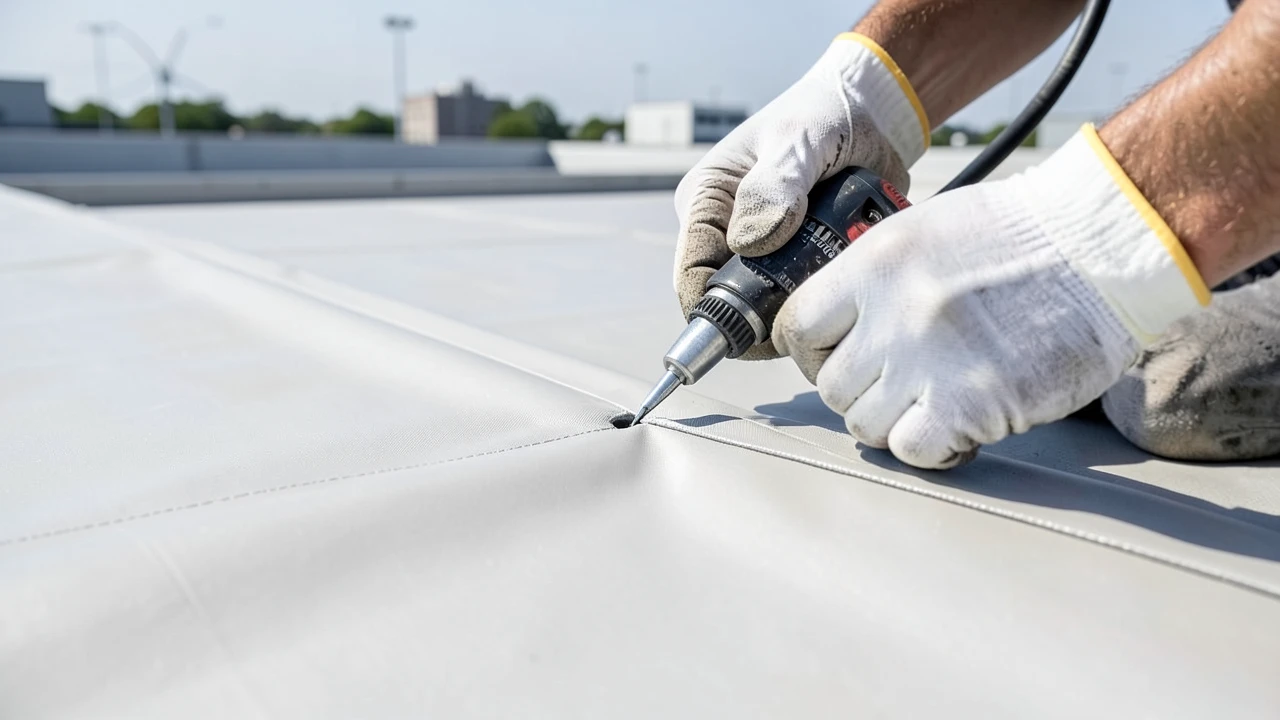
TPO repairs rarely involve just gluing two pieces of plastic together; they involve creating a molecular bond. To achieve this lasting seal, we often utilize specialized heat welding units. These aren't standard household soldering irons. They are calibrated, high-precision tools that apply specific amounts of controlled heat and pressure to the TPO edges. This process melts the materials slightly at a molecular level, ensuring the seam doesn't just overlap-it fuses. If you use inadequate equipment or simply rely on generic adhesives, you might get a seal today, but one that will fail when temperature swings hit in January or during a summer heatwave.
The Danger of Inadequate Cutting and Preparation
Think about preparing the surface for the repair. When we cut around flashing-the metal pieces where the roof meets chimneys or walls-or when we prepare an edge seam, improper preparation is disastrous. Using non-specialized blades can create minute tears or weaken the membrane structure in a way that looks invisible to the naked eye. Under the natural stress of thermal expansion or intense UV exposure common here in Dallas County, these microscopic weaknesses become pathways for water intrusion.
Flashing and Penetrations Are Critical Weak Spots
This is where most amateur repairs fail spectacularly. Every vent pipe, every drain exit point, and every section of flashing is a complex junction-a potential weak spot that requires specialized tools to navigate. We need precision cutters designed specifically for the TPO material so we can cut around these junctions without ever tearing the underlying waterproofing membrane or compromising the seal where it meets the metal flashing.
A homeowner I worked with last year, who had attempted a minor patch near a drain exit using basic sealant and tape, was concerned about just the leak point. But when we used our specialized tools to assess the junction, we found that the improper cutting had stressed the entire adjacent section of flashings, meaning the whole area needed replacing-a huge difference in cost and integrity! For instance, if you are considering getting a new roof started after an issue like this, understanding the full scope of necessary repairs is critical.
Step-by-Step Transparency: What Specialized Equipment Allows Us to Repair Safely
When we arrive at a job site in Oak Cliff, our first priority isn't applying materials; it’s diagnosis. We need specialized tools just to see what the underlying problem is. This proactive transparency is how we build trust.
Initial Assessment with Advanced Diagnostic Tools
Before any cut or bond takes place, we use non-destructive diagnostic equipment-things like moisture meters and infrared cameras. These are not fancy gadgets; they are essential tools that allow us to see where water has already penetrated behind the visible surface. This means we aren’t just fixing the leak point; we are verifying the structural condition of the decking and insulation underneath, addressing the hidden pain points homeowners fear most.
Seaming Integrity: The Welding Units and Rollers
During the actual repair process, specialized welding units provide uniform heat and pressure across the bond area. These tools ensure maximum lifespan because they create a true, continuous waterproofing barrier. We follow this up with custom seam rollers that apply perfect tension and pressure during cooling, guaranteeing every square inch of the repaired joint is sealed perfectly against Texas weather.
Material Handling and Meticulous Cleaning
Specialized vacuum equipment isn't just for sucking up debris; it’s often needed to remove accumulated contaminants-dust, mineral deposits, or even fine grit that can act like sandpaper when placed on a new bond. We also use chemical cleaners specifically formulated for TPO membranes, ensuring the surface is pristine and ready for bonding without damaging the polymers themselves. This meticulous cleanup is a cornerstone of our process.
Structural Support During Repair
Sometimes, especially if the repair involves a large section of flashing or decking replacement, the roof structure itself needs temporary support to prevent warping or movement during the curing time. These techniques require tools and knowledge far beyond standard residential roofing work, showing that we treat the entire building assembly, not just the visible surface.
Protecting Your Investment: How Specialized TPO Repair Affects Curb Appeal and Lifetime Value
When you're staring at a leak, it’s easy to think of specialized repair as just another expense-a cost center. But I want you to look at it differently. We need to view this process not as an immediate expenditure, but as proactive maintenance that preserves your property’s long-term value.
A perfectly executed TPO repair means the roof looks seamless and structurally sound. This contributes significantly to the overall aesthetic-what we call curb appeal-which is vital in desirable Oak Cliff neighborhoods. When a potential buyer or even your own HOA sees a flawless, professionally repaired structure, it speaks volumes about the property's care and management.
For property managers or those dealing with multi-unit buildings, specialized repairs minimize operational downtime and drastically reduce liability risks associated with chronic leaks that could damage expensive common areas. These professional techniques mean faster return to function and less disruption for tenants.
Think of the cost differential: The upfront investment in specialized tools and highly trained labor is significantly lower than the eventual costs incurred from unexpected water damage. We are talking about mold remediation, damaged insulation, ruined decking, or even structural decay-disasters that can quickly eclipse the entire repair bill. By investing in proper technique today, we safeguard your asset for years to come.
Beyond the Repair: Building Your Shield Against Texas Weather
While TPO is fantastic and specialized repairs are crucial, a roof failure is rarely caused by just one single point. It's usually a confluence of factors-drainage issues, wear on flashing, or overlooked gutters. So, when we finish up, I always want to leave you with a comprehensive assessment checklist. Since roof failure is rarely caused by just one single point, understanding the full scope of work, including general roofing concerns, might be helpful; you can see service details here.
When considering your reliable roofing Cedar Crest Texas needs, don’t only focus on TPO. We need to take a holistic view:
- Drainage: Are the internal drains clear and sloping correctly? Blocked drainage is often the number one cause of unseen water damage.
- Flashing Condition: Is the metal flashing around vents and parapet walls intact, sealed, and free from mineral buildup?
- Guttering/Gutters: Even for a flat roof, surrounding elements like gutters must be clear to manage runoff effectively.
If you've been through a major storm-especially hail or high winds which are common here in the Dallas area-even if the visible leak point is fixed, secondary damage assessments are critical. Wind can shift materials and compromise joints far from where the initial impact occurred. If you’ve been through a major storm-especially hail or high winds which are common here in the Dallas area-even if the visible leak point is fixed, secondary damage assessments from local roofing experts are critical.
Finally, let me give you some advice on protecting yourself as a homeowner. When seeking out contractors, remember to ask hard questions. Look for proof of licensing specific to Dallas County regulations, clear warranty documentation that covers both labor and materials, and mandatory insurance verification. You deserve transparency!
If you are concerned about the hidden health of your roof or if you're simply doing routine maintenance on a property in Oak Cliff, I encourage you to call us at +1 469-589-3827. We don’t do pressure sales; we offer an expert consultation where we diagnose the true needs of your building first. Let us show you how our specialized process can reinforce your home’s structural integrity, giving you peace of mind that lasts for years.